
The development journal
September 2026 Update: Taxes, Public Health & Defending Your City
Explore taxation, public health, military defenses, Eastern Desert Raiders and the details that bring storage buildings to life.
 By Bura Chuhadar9 min read
A closer look at city administration, health services, military defenses, enemy raiders and the details that bring storage buildings to life.
Hello builders,
A growing city needs more than houses and a steady food supply. It needs an income, people who can keep working, and defenses to protect what you have built.
This September development update brings together my recent work on taxation, public health, natron production, military defenses and enemy raids in Tutankhamun: Builders of the Eternal. I have also been giving the buildings and their stored goods a closer visual pass.
The direction is simple: make the parts of the city depend on one another, and make those connections easier to understand. Here is a closer look at how that is taking shape.
Visual note: The images in this update are staged Blender asset showcases, not gameplay screenshots. They use project models in a separate presentation scene; lighting and detail can differ from the game. Everything shown is work in progress.
A Tax Office with work to do
Taxation is becoming part of the city itself. A staffed Tax Office sends a collector along the road network to visit occupied, eligible households and bring revenue into the treasury.
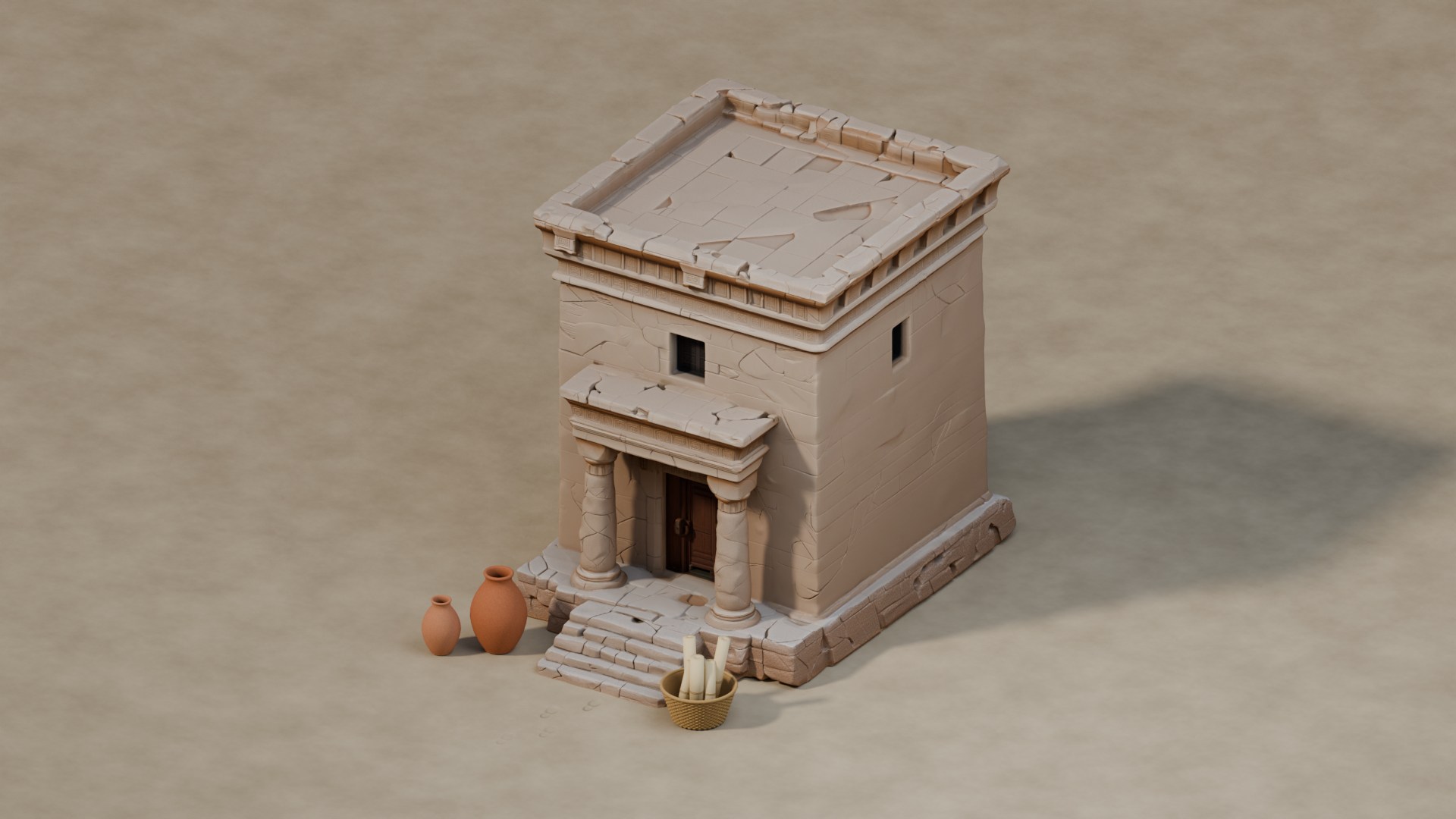
The refreshed Tax Office, presented with a few entrance props for this showcase.
You can choose Low, Standard or High taxation. A household's contribution depends on its residents and housing level, with the earliest level of housing exempt. Collection is tracked by month, so a household is not charged again every time the collector passes.
The collection records show revenue and the households reached. There is also a guided introduction, taking the player from placing the office and choosing a rate to receiving the first collection. An office needs more than an impressive entrance: it needs staff and access to the people it serves.
Keeping the city healthy
Public health adds another reason to watch how a neighborhood grows. Crowding, water provision and service coverage contribute to health conditions, while illness can leave fewer residents available for work.
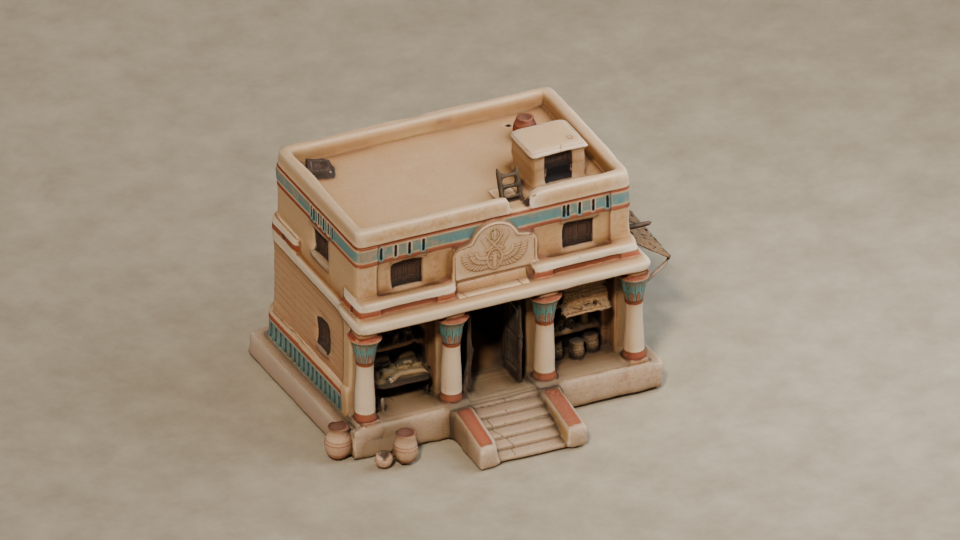
House of Healing: physician services for the growing city.
The House of Healing brings physician services to homes its walkers can reach. The Sanitation Post has a different role: improving sanitation coverage and reducing the environmental risk that helps illness spread.
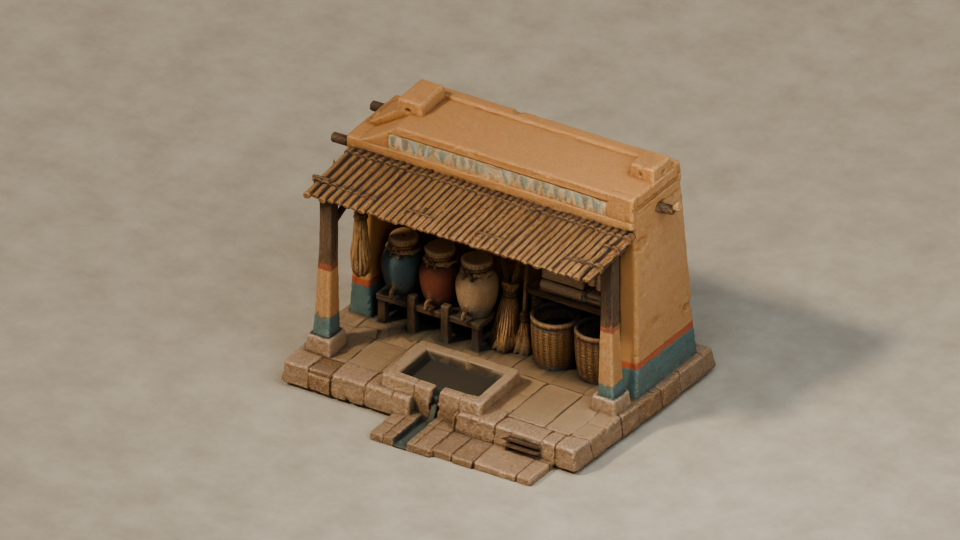
Sanitation Post: a separate service for healthier surroundings.
The developing health overlay distinguishes healthy households from those needing attention, those that are sick, and those affected by an outbreak. I want the reason for a struggling neighborhood to be visible, rather than hidden behind an unexplained number.
Different needs, different services
Health is not being treated as a single building that solves everything. The Dentist's Office addresses dental pain, which can also affect how many residents are available for work.
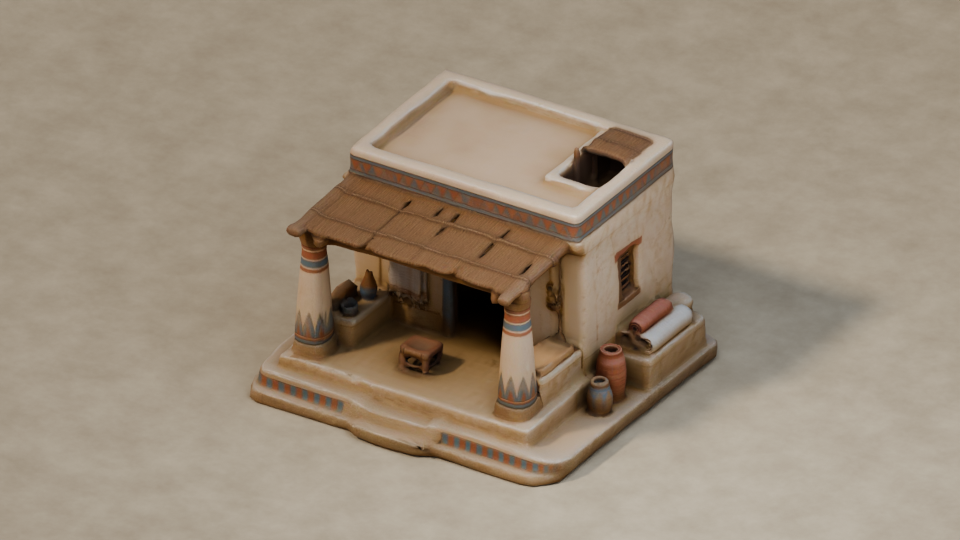
Dentist's Office: a dedicated service with its own visual identity.
The Embalmer's Workshop handles another part of the system, helping the city respond to deaths. Its work depends on keeping both linen and natron available.
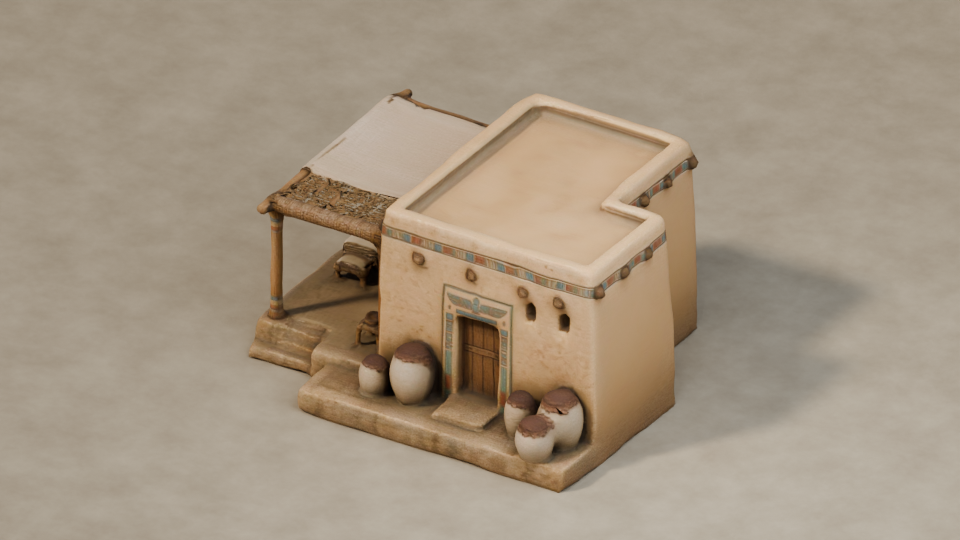
Embalmer's Workshop: health services connected to material supplies.
These services are being introduced through guided tutorial steps alongside the health overlay. The aim is to make the responsibilities clear as the city becomes more demanding.
Natron joins the supply chain
Those health services connect to the wider economy. Natron Works are tied to suitable dried lakebed locations, giving the material a specific place in the landscape rather than making it another building that can go anywhere.
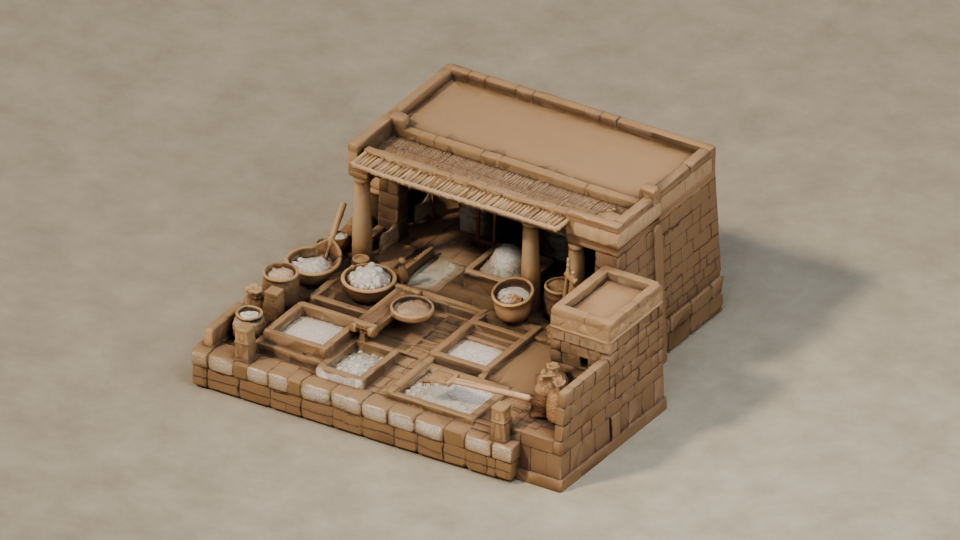
Natron Works asset study. The sand backdrop is a showcase setting, not a placement demonstration.
Natron and linen are both needed by the Embalmer's Workshop. Keeping those materials available is part of keeping the service functioning: placing the building is only the beginning.
That is the kind of connection I want to strengthen throughout the city. Where you produce resources, how you organize storage, and which services you support should all matter to the same settlement.
Stronger defenses for the city
Building on the earlier work on squads, formations and walls, I have continued developing military gates, towers and the tower mounted ballista.
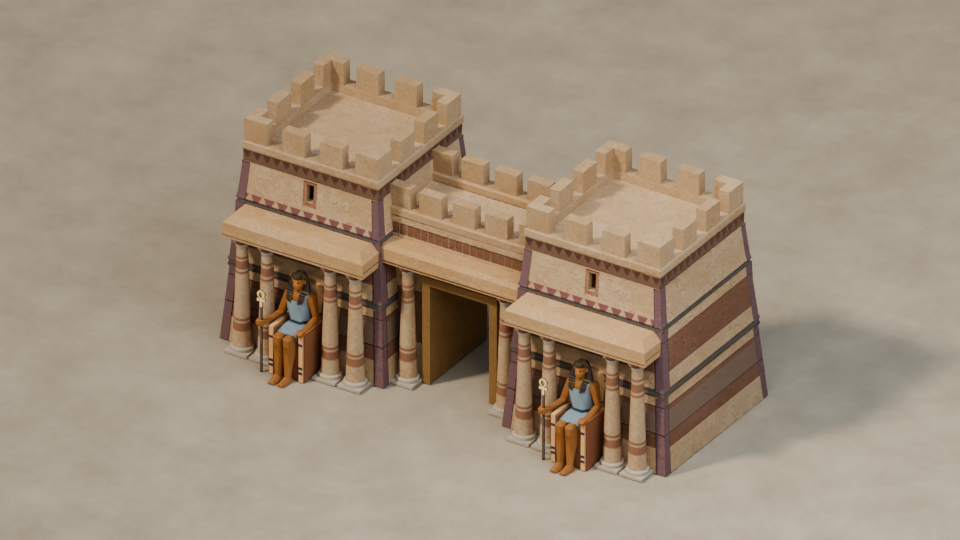
Military Gate: a more substantial entrance through the defenses.
The tower weapon connects to labor and road access, rather than operating as a freestanding decoration. Its supporting behavior includes tracking hostile squads, firing and reloading.
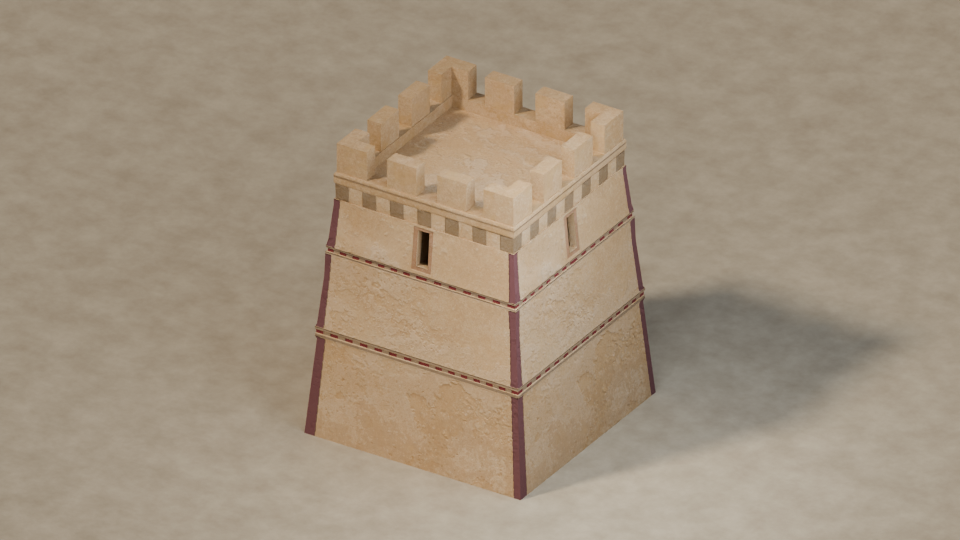
Tower structure, shown without its weapon.
The gate, tower structure and ballista are shown separately here so their details are easier to see. Combat development is continuing; this is not an announcement that every battle or campaign scenario is finished.
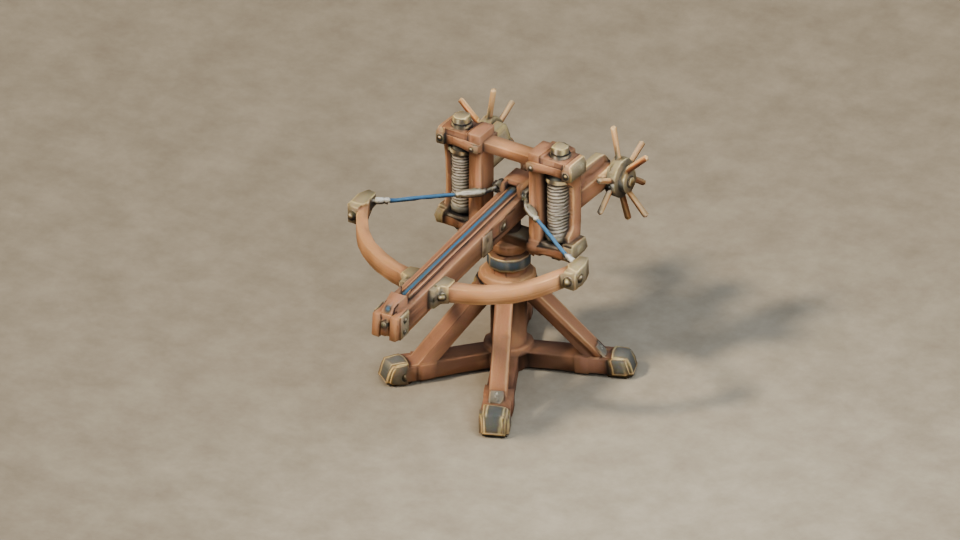
Ballista detail, shown separately from the tower.
Threats from the Eastern Desert
Those defenses need something to defend against. The current enemy roster brings together Eastern Desert Raider spearmen and archers, with separate character models and different battlefield roles.
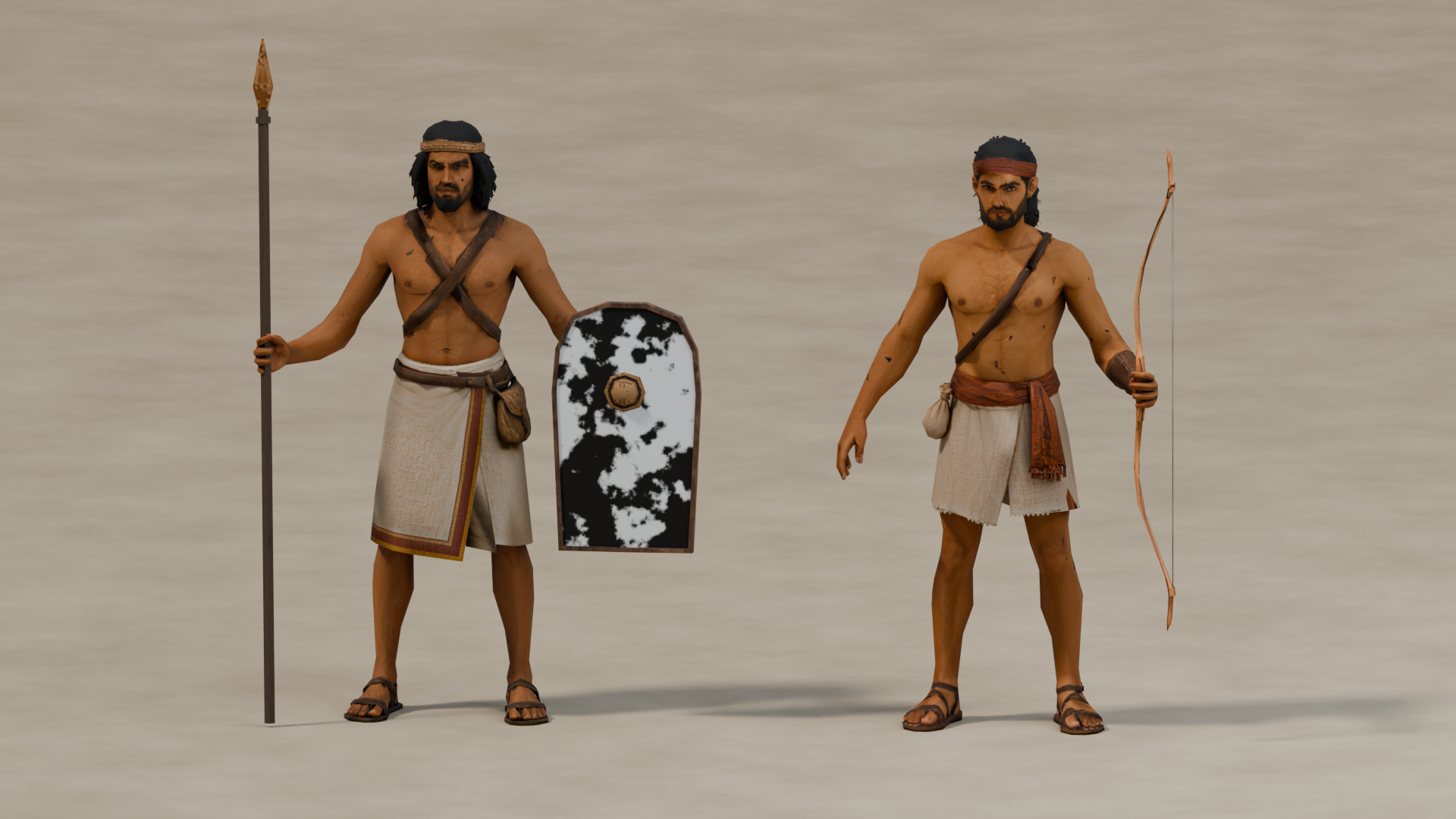
Eastern Desert Raiders: spearman on the left, archer on the right. Offline Blender character study with hand poses prepared for this presentation; not captured from a combat animation.
Spearmen: pressure at close range
The spear and shield troops provide the raid's close combat force. Their tactical logic considers the formation they are approaching: a wedge can be used to press into a line, while a compact box can prompt a pinning approach from one squad and an attempt to flank from another. Exposed archers give them a reason to close the distance directly.
Visually, the longer hair, crossed straps, edged linen wrap and shield give this model a different outline from the bowman. The closer view makes the face, headband, belt and equipment easier to inspect than they would be at the normal gameplay camera distance.
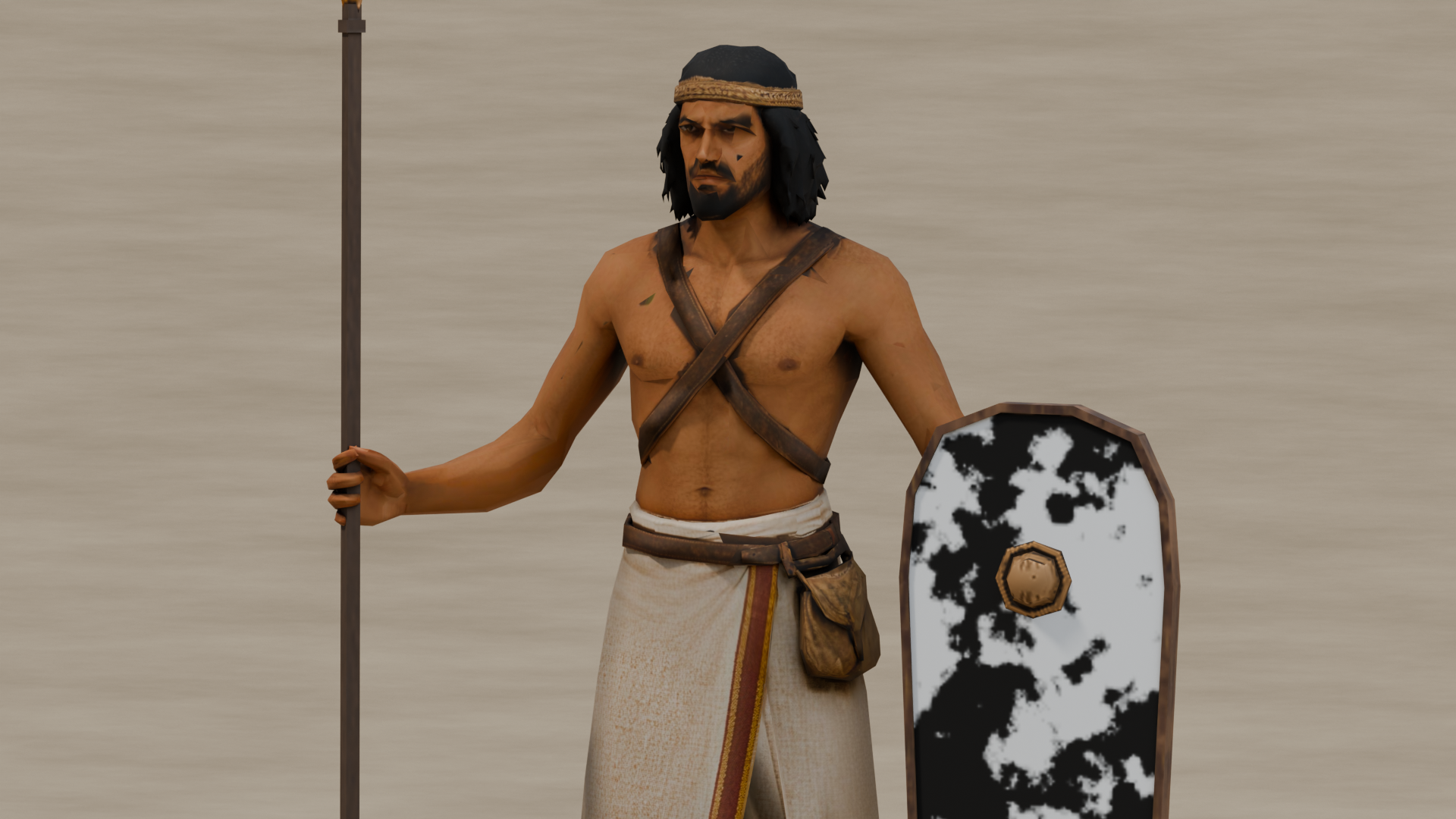
Spearman detail: current character textures and project equipment, with the spear grip posed for this offline Blender study.
Archers: a threat at a distance
The raider archers have a different job. Their behavior seeks a useful firing distance, moving into range or repositioning when an opposing squad gets too close. Formation also affects their approach: compact targets can draw concentrated volleys, while a column can prompt an angled firing position.
The shorter wrap, warm colored headband and sash, arm guard and bow help distinguish the archer from the spear carrier. I want that difference to remain readable when the units are small on screen, not just in a detailed view.
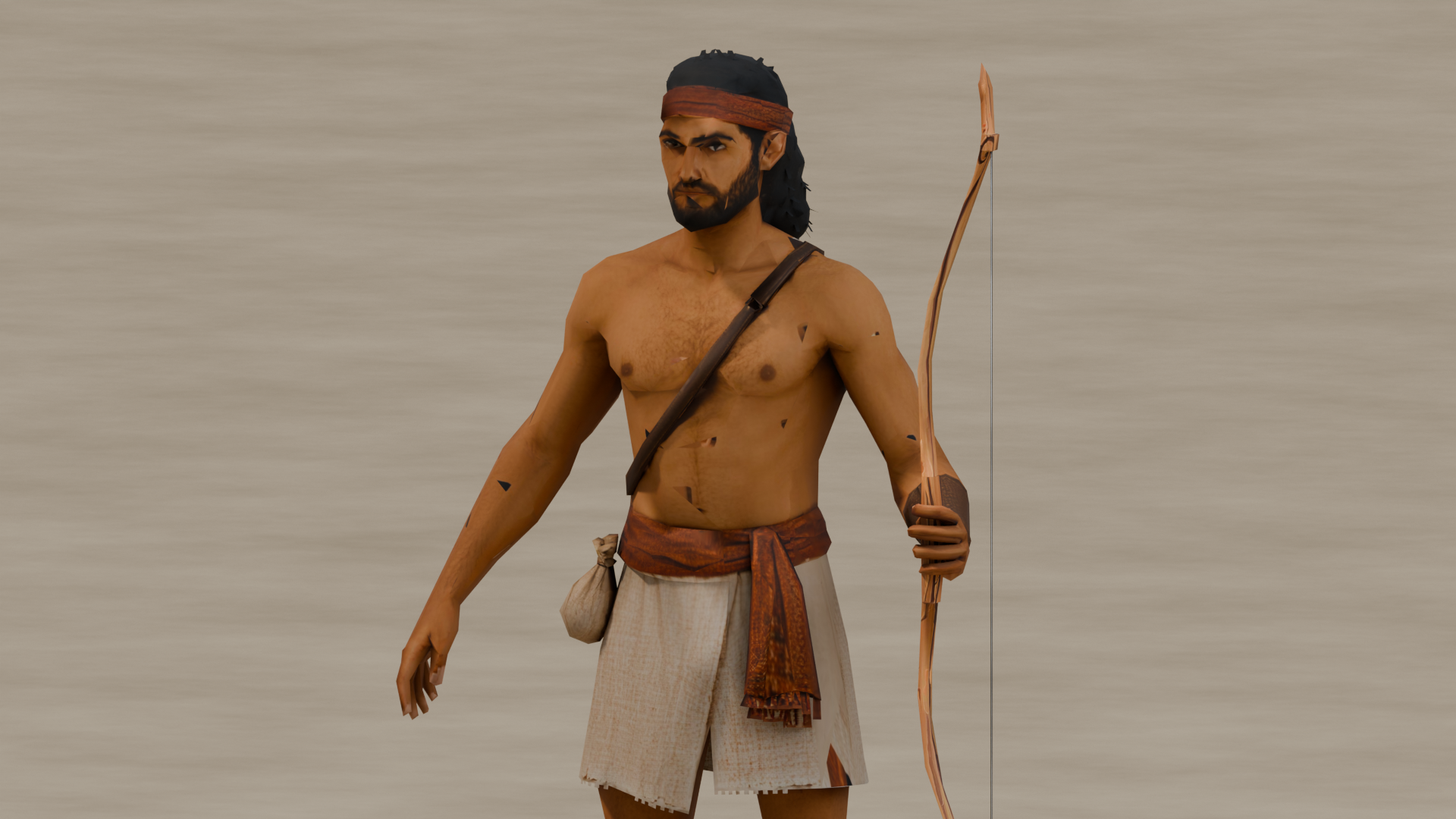
Archer detail: body and bow study, with the bow grip posed for this offline Blender showcase. This is not a full equipment loadout or animation preview.
Time to prepare, consequences for ignoring it
In the current Naqada scenario, an approaching raid is announced before the force arrives. A countdown and approach marker give you time to organize troops and consider where to defend the city. The configured force mixes spear squads with archers rather than sending only one type of opponent.
Raiders are not limited to chasing soldiers: when they are not engaging a defending squad, they can turn their attention to city structures. That makes the army and the city's defenses part of protecting the settlement itself.
These are the current systems being developed, not a promise of a finished enemy roster or campaign. Timing, tactics and balance still need continued playtesting and refinement.
Making military equipment readable
I have also been looking at how the armory communicates its purpose. From an isometric camera, a crowded collection of wooden racks can be difficult to distinguish from ordinary storage.
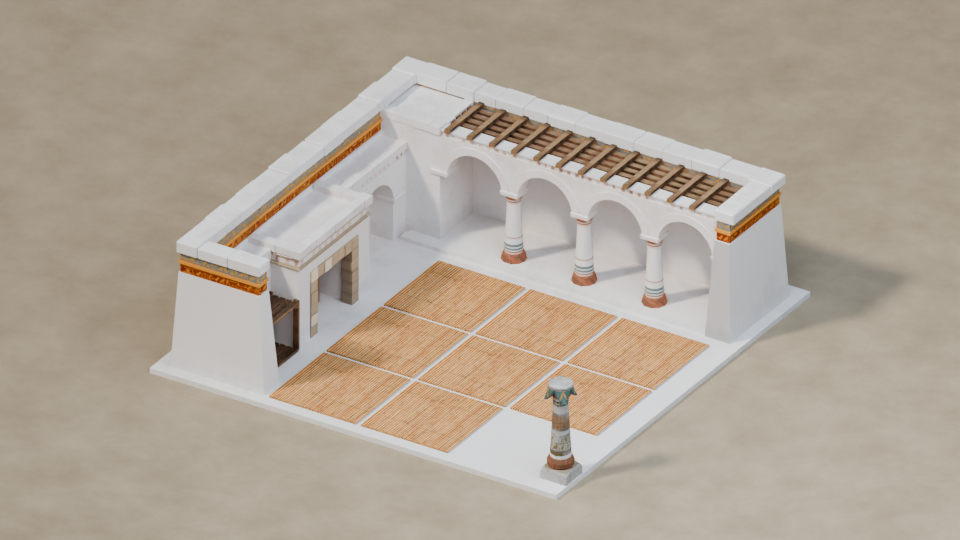
Armory architecture: an open courtyard for equipment storage.
The work on its equipment presentation is intended to make weapons easier to recognize at a glance. The shield detail below is one of the project's existing military assets, shown separately for a closer look.
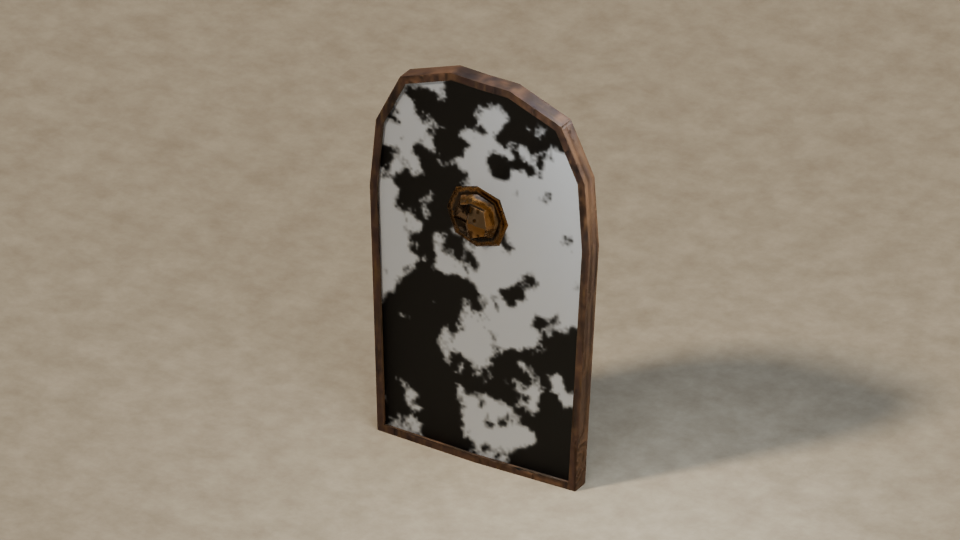
Shield detail: one of the project's existing military assets.
This section focuses on the armory architecture and equipment design, not a full stock gameplay state. Their scale and arrangement within the building remain part of the visual refinement work.
Storage with a clearer identity
Granaries and warehouses should tell you more than how much space they occupy. I have been refining the way different foods, materials and finished goods are presented in storage.
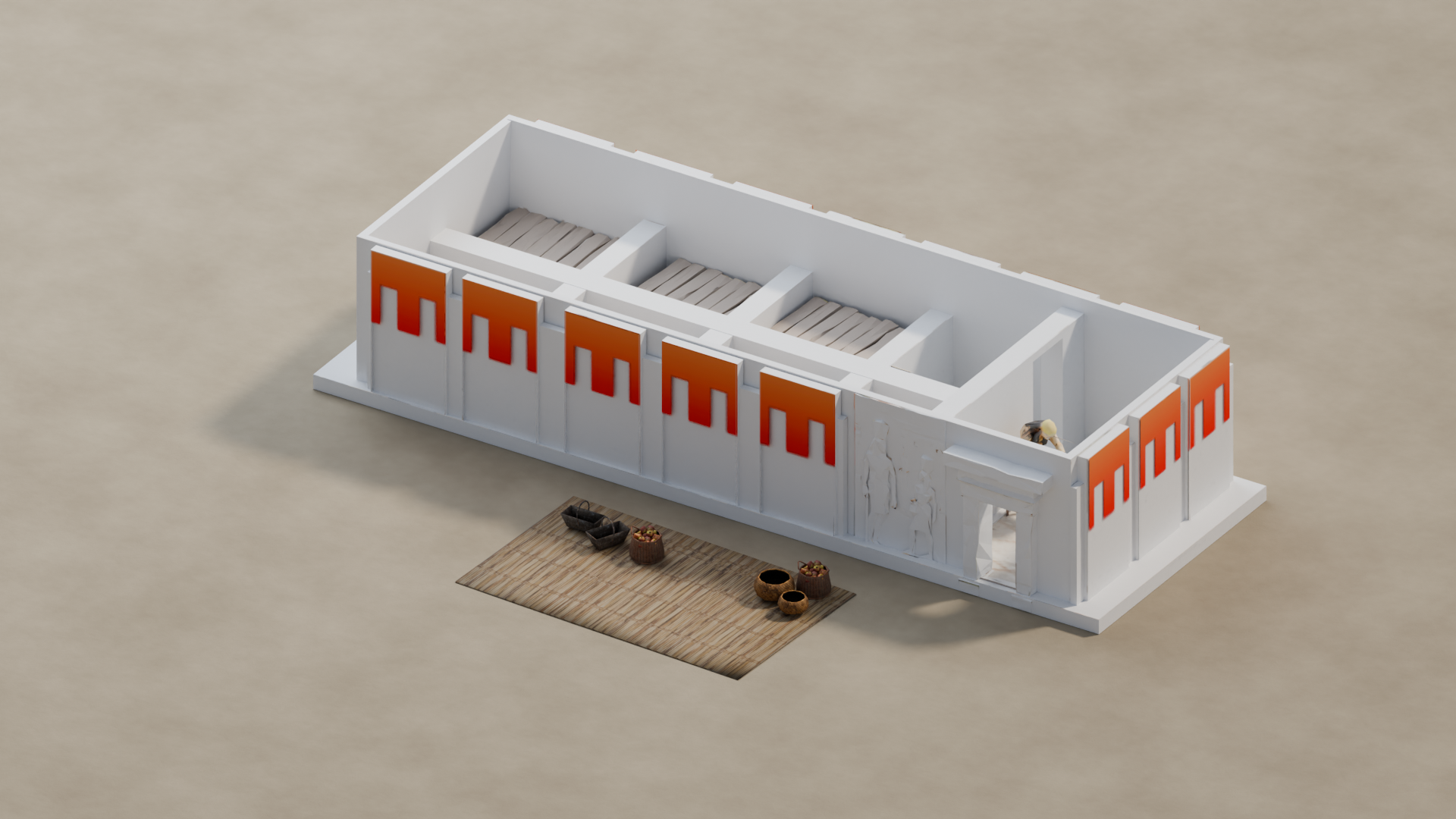
Granary architecture study. Food props are shown in detail below.
The granary's food presentation ranges from baskets of produce to dedicated hanging meat racks. The warehouse supports a broader range of goods, while the armory concentrates on military equipment.
Here are three stocked granary studies, with all seven display bays occupied. Higher camera angles show how the baskets sit on the wooden supports and make the contents easier to see.
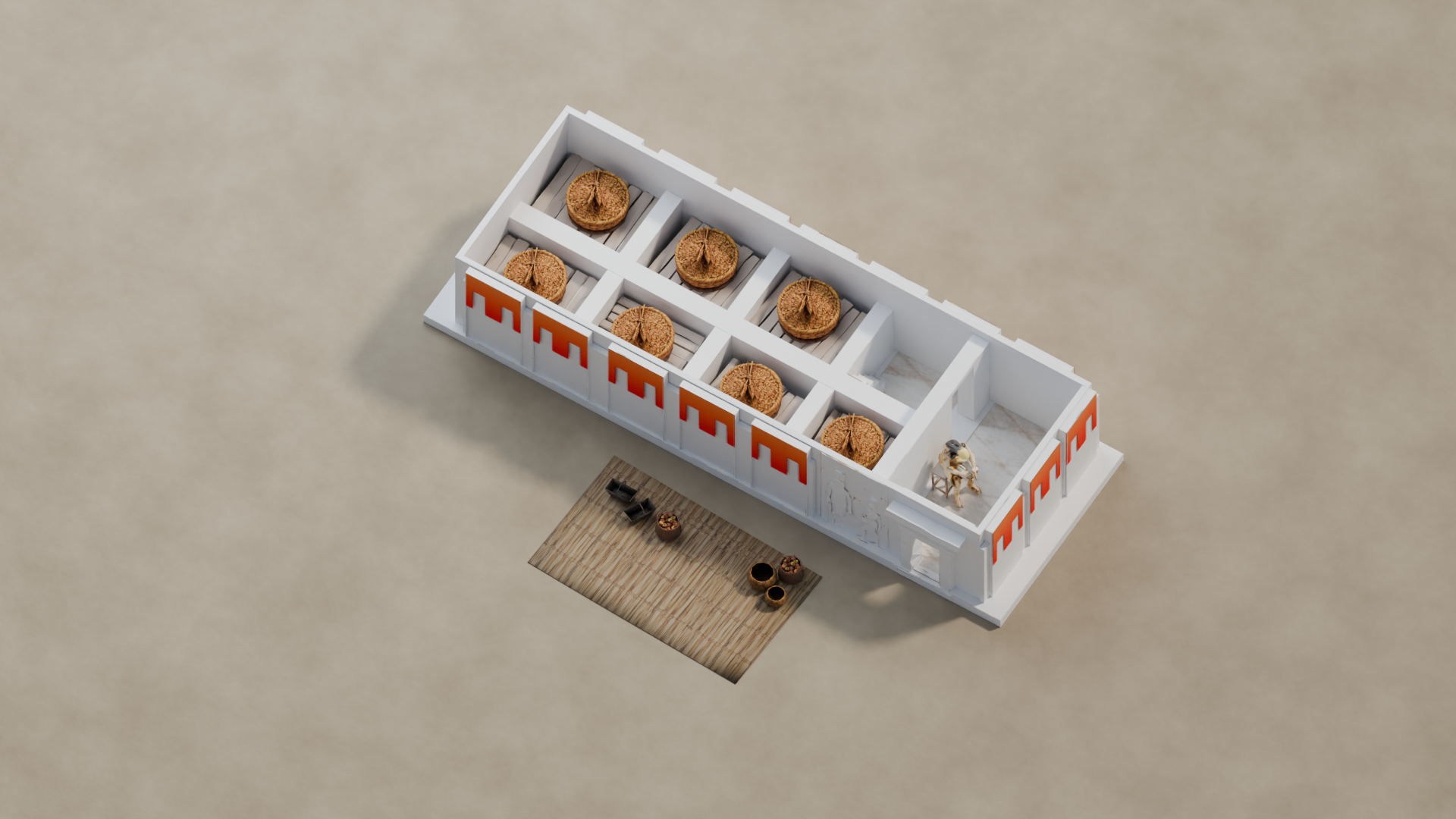
Full grain granary: seven baskets on the storage planks, staged in Blender.
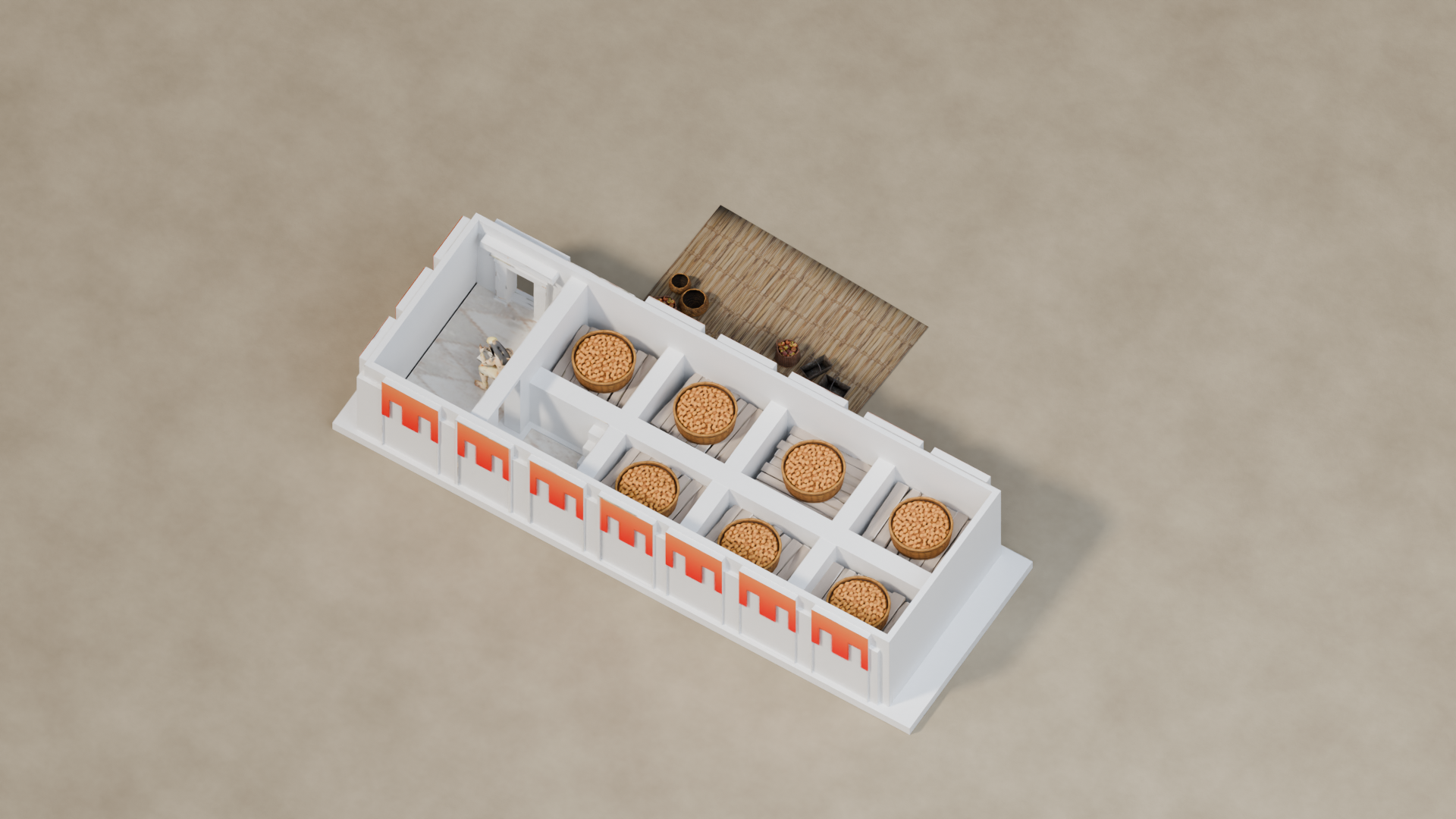
Full chickpea granary: a view from the opposite side, including the short end bay.
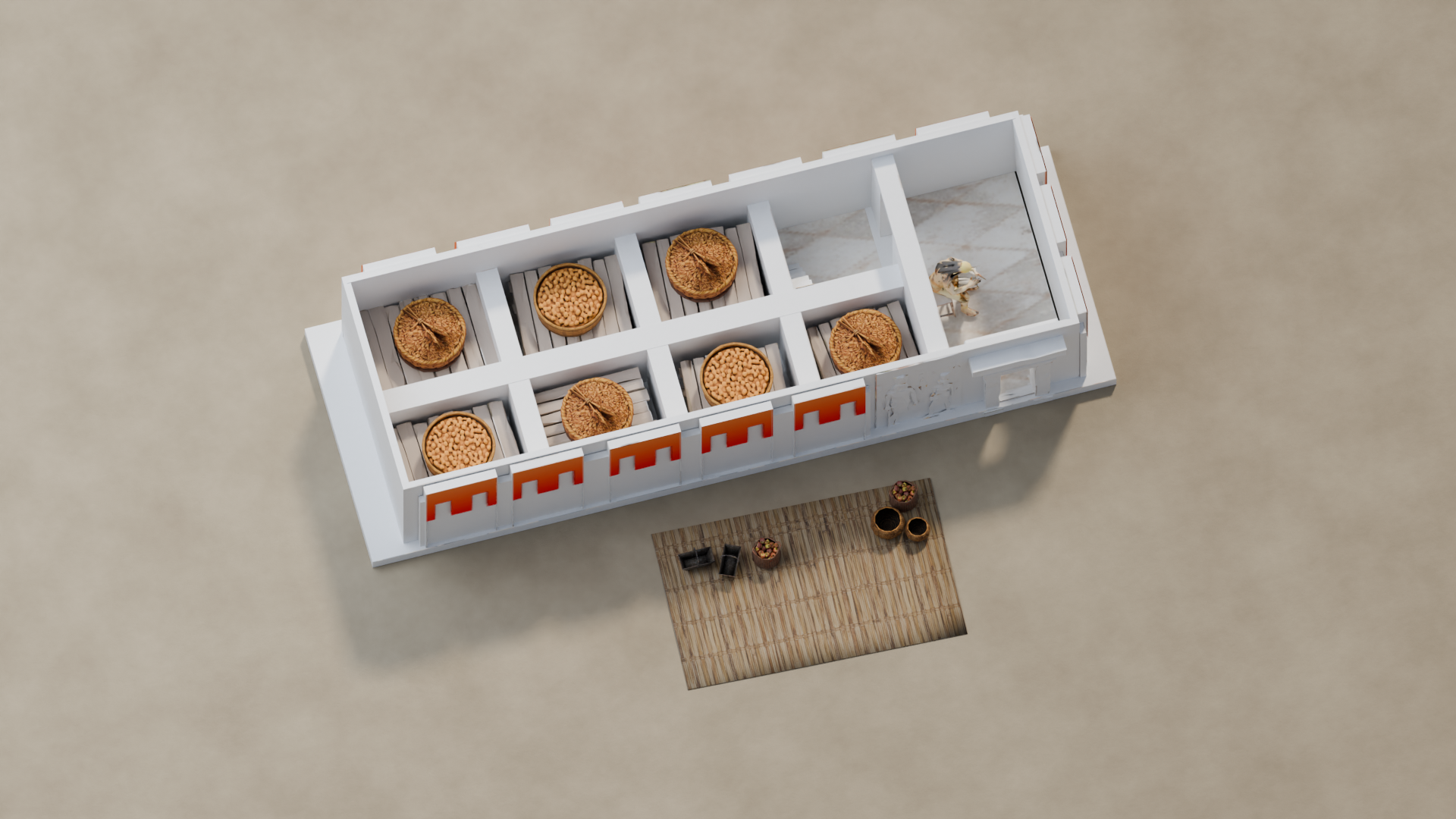
Mixed grain and chickpea stock: an elevated look into all seven bays. These are staged asset studies, not gameplay captures or a demonstration of inventory capacity.
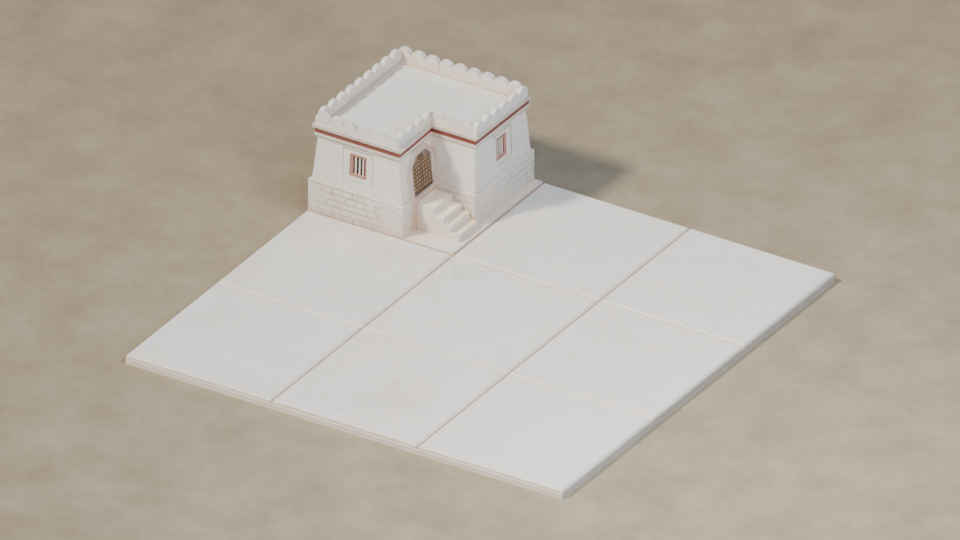
Warehouse architecture study, without a staged full inventory.
The architecture and stocked views show two sides of the same work: the building itself, and the scale, orientation, support heights and wall clearance of the goods inside it. The warehouse is shown without a staged inventory here.
Small details, a more readable city
A basket that floats above its support, disappears into a plank, or clips through a wall becomes very noticeable when it repeats across a city. The recent food prop work has been about those details as much as the models themselves.
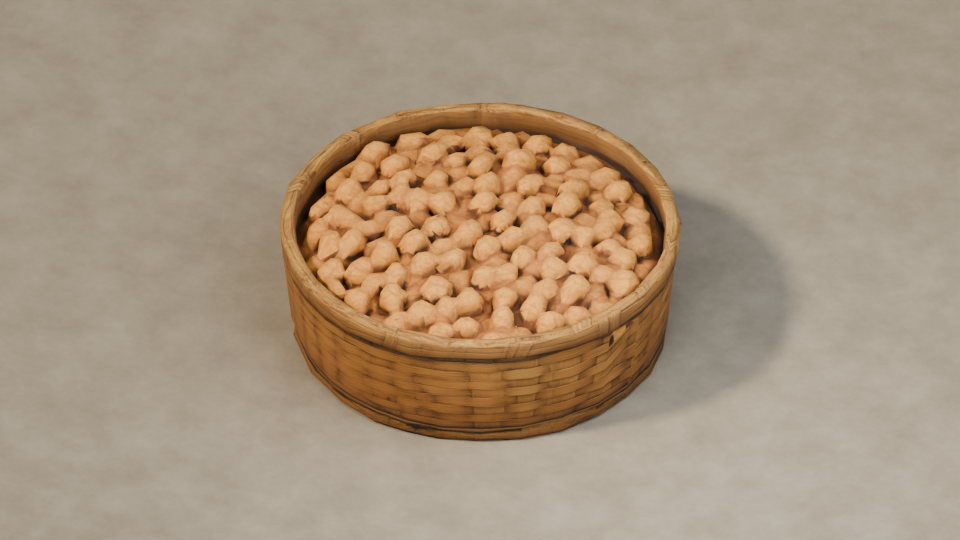
Chickpea basket: a detailed view of the current textured asset.
Chickpeas and grain are two examples shown here in detail. I am continuing to refine the presentation so the contents remain recognizable at the game's normal viewing distance.
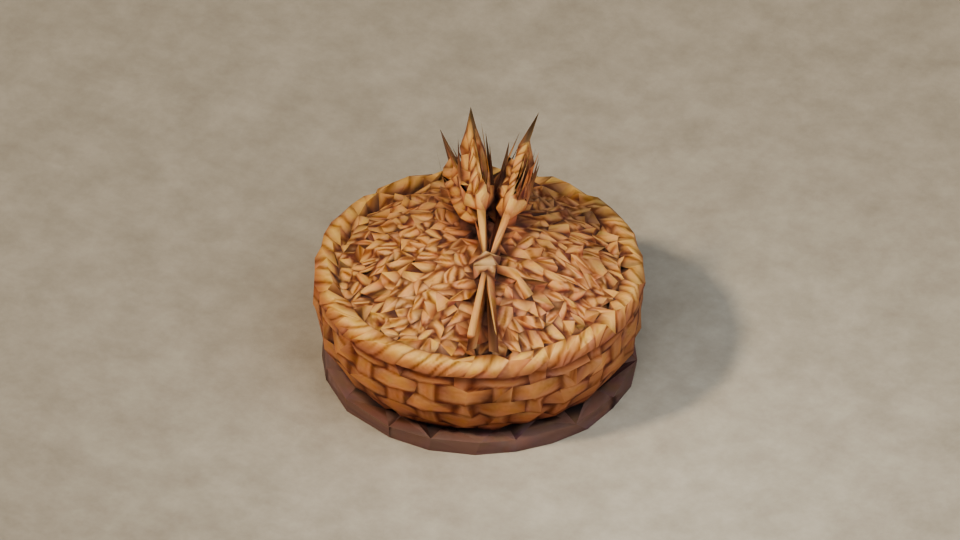
Grain basket: an isolated look at the resource model.
Looking ahead
My next focus is on how these systems work together, alongside clearer tutorials, feedback and presentation. Thank you for following the project and for the feedback on the recent images; it has helped highlight the details that still need another pass.
What would you like to see in more detail next: taxation, public health, or the military?
You can wishlist Tutankhamun: Builders of the Eternal on Steam to follow the next steps.
Solo Developer
The journey continues.
Explore more updates