
The development journal
Food Chain Complete - Market Stalls, Granaries, and the Full Loop
The full food chain is now connected end to end, with market stalls and granaries forming a living supply web across the city.
 By Bura Chuhadar3 min read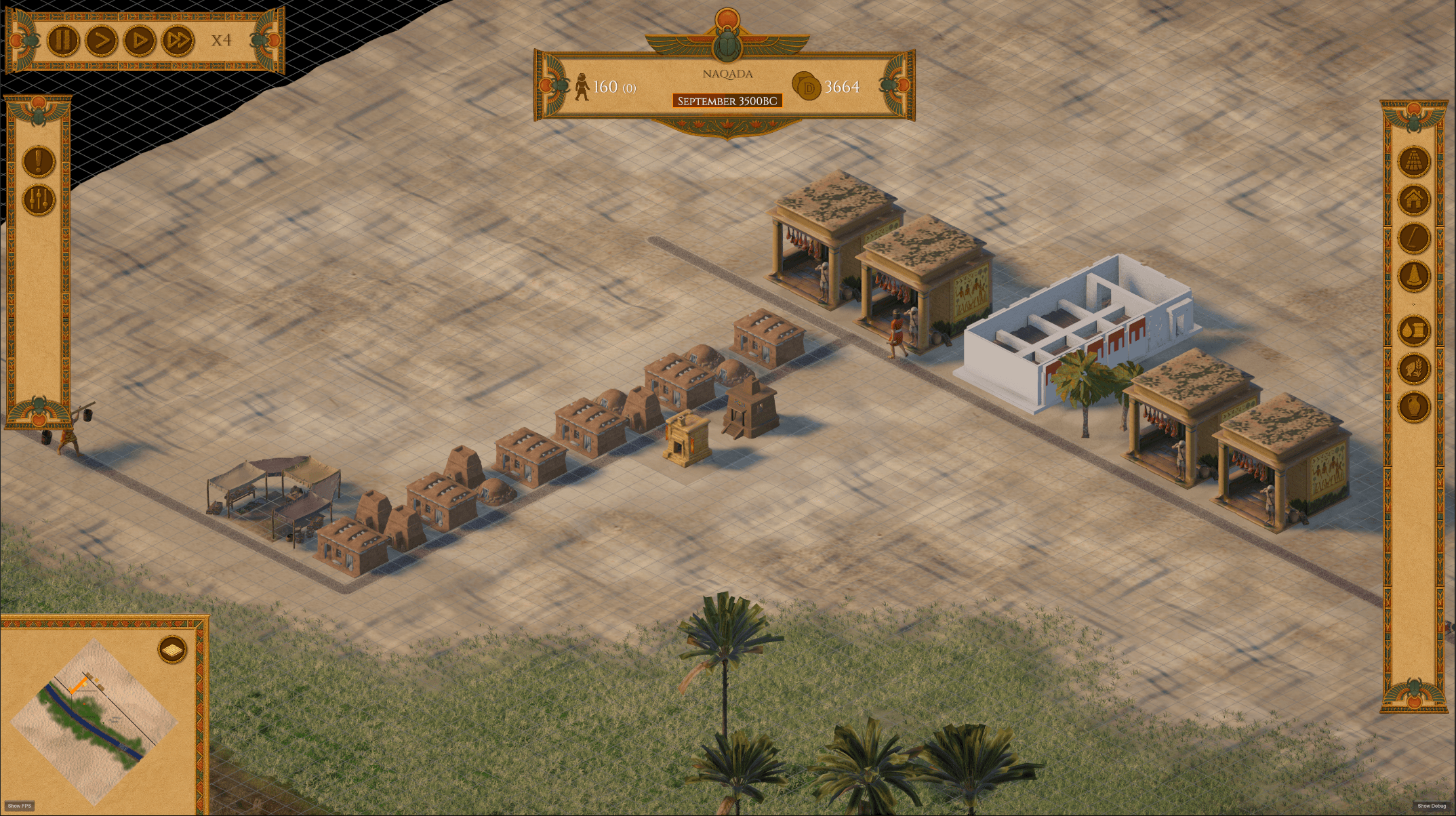
Hi everyone!
This month is a big milestone: the food chain is completed. Gathering, storage, and distribution are now connected end to end, and I’m actively testing how the full loop behaves in real gameplay. Below is a detailed look at what’s new and how these systems work together.
Food Chain: Now Complete
With the full chain in place, the city’s supply flow now feels like a living network rather than isolated systems. I can finally observe how food moves across the map and tune pacing, efficiency, and balance based on actual play results. This is a major step toward deeper simulation and meaningful city planning.
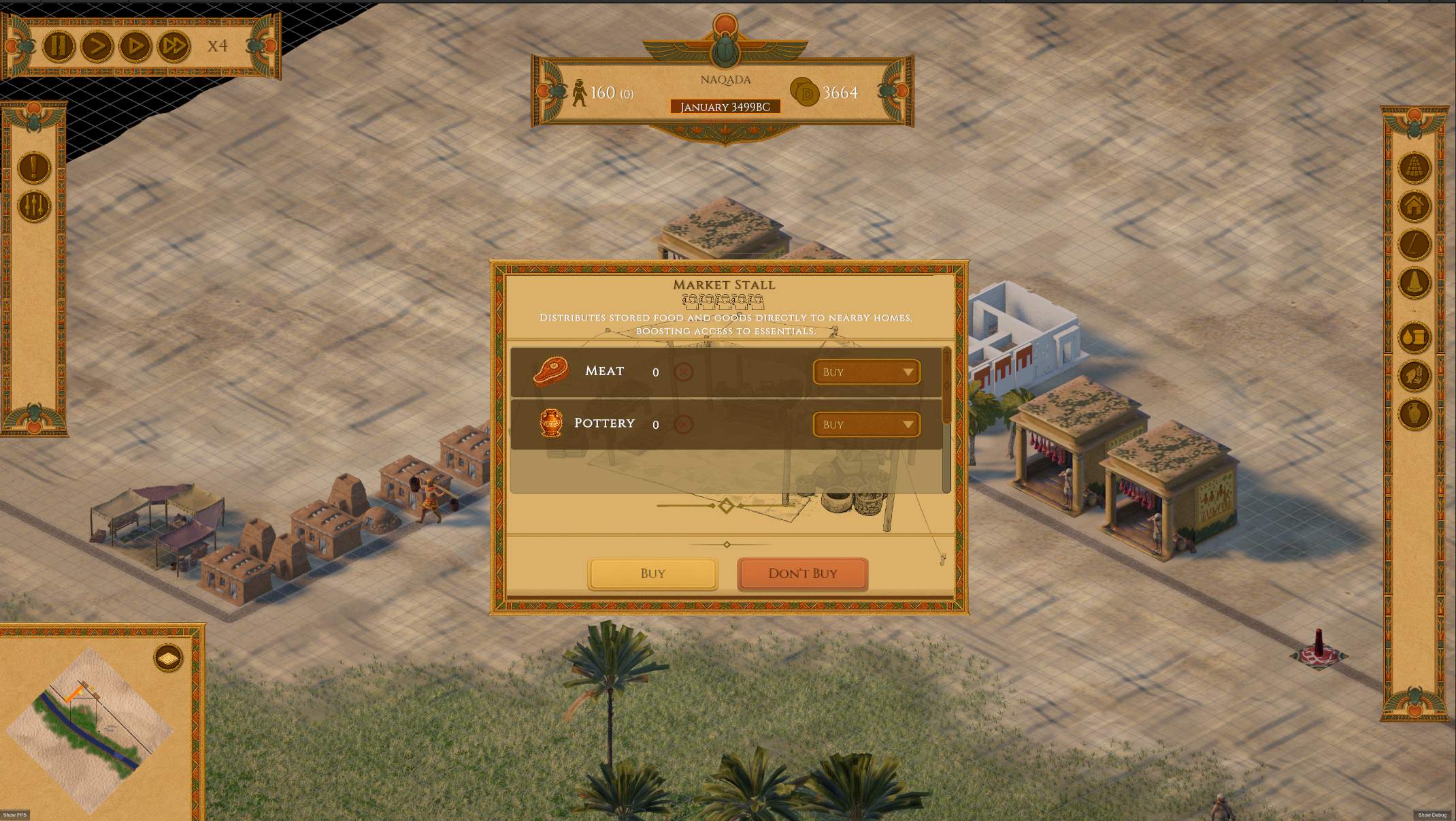
Market Stall - The Distribution Hub
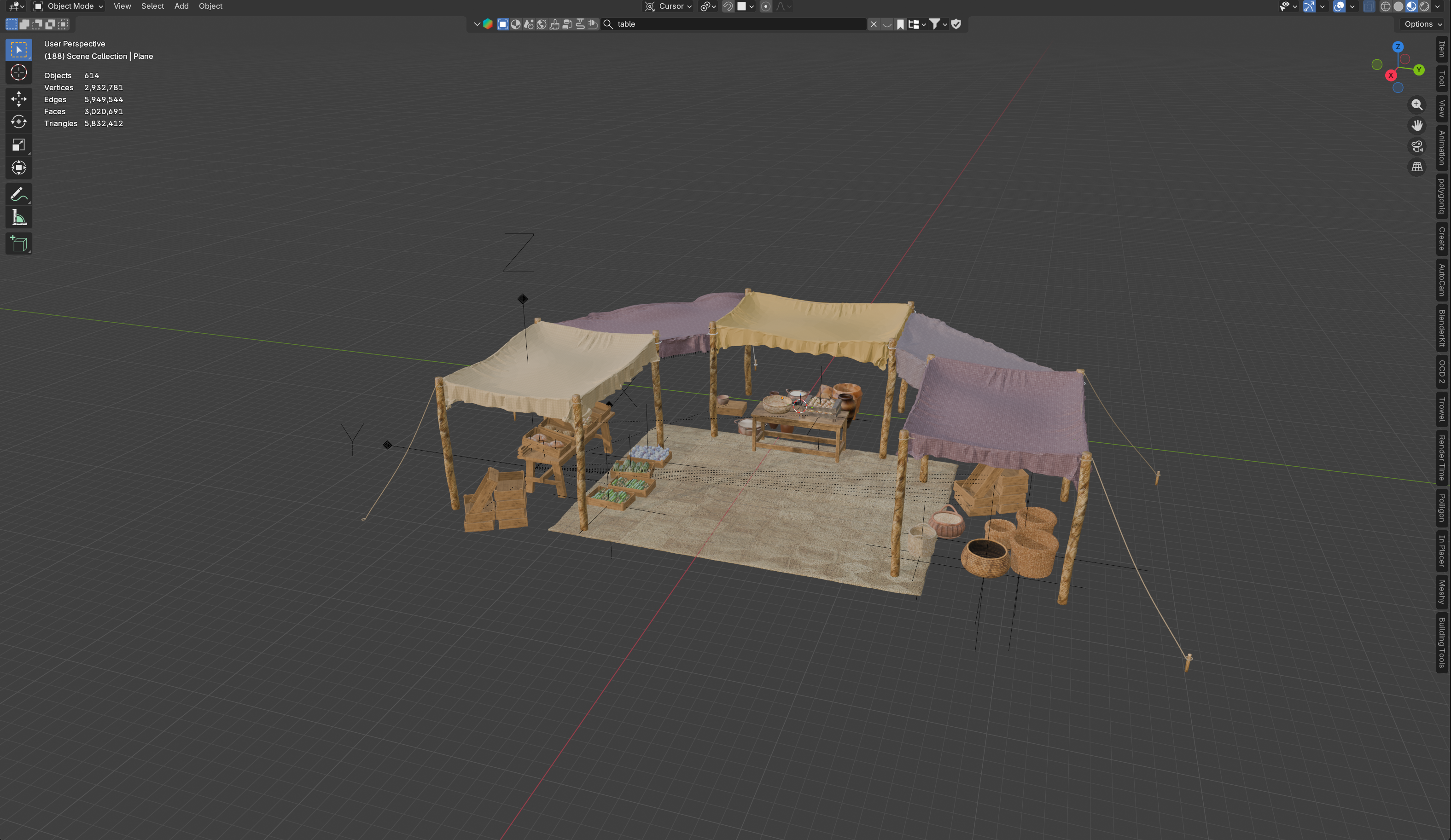
The Market Stall is the daily access point for food and trade. It’s not just decoration - it shapes how your city feels and functions.
Key ideas behind it:
- Placement clarity: Stalls are now placed in a way that makes valid locations obvious and integrates cleanly with nearby paths.
- City flow: Market Stalls sit at the heart of neighborhoods, encouraging roads and housing to grow around them.
- Multiple stalls matter: A single stall isn’t intended to serve an entire city forever. Adding more stalls increases coverage, reduces congestion, and makes the town feel more alive.
- Visual presence: Stalls are built to feel lively and important, making them a recognizable hub in the city’s daily rhythm.
These ideas are inspired by the classic Impressions city builder games, adapted to support more organic city growth and modern systems under the hood.
Granary - The Backbone of Storage
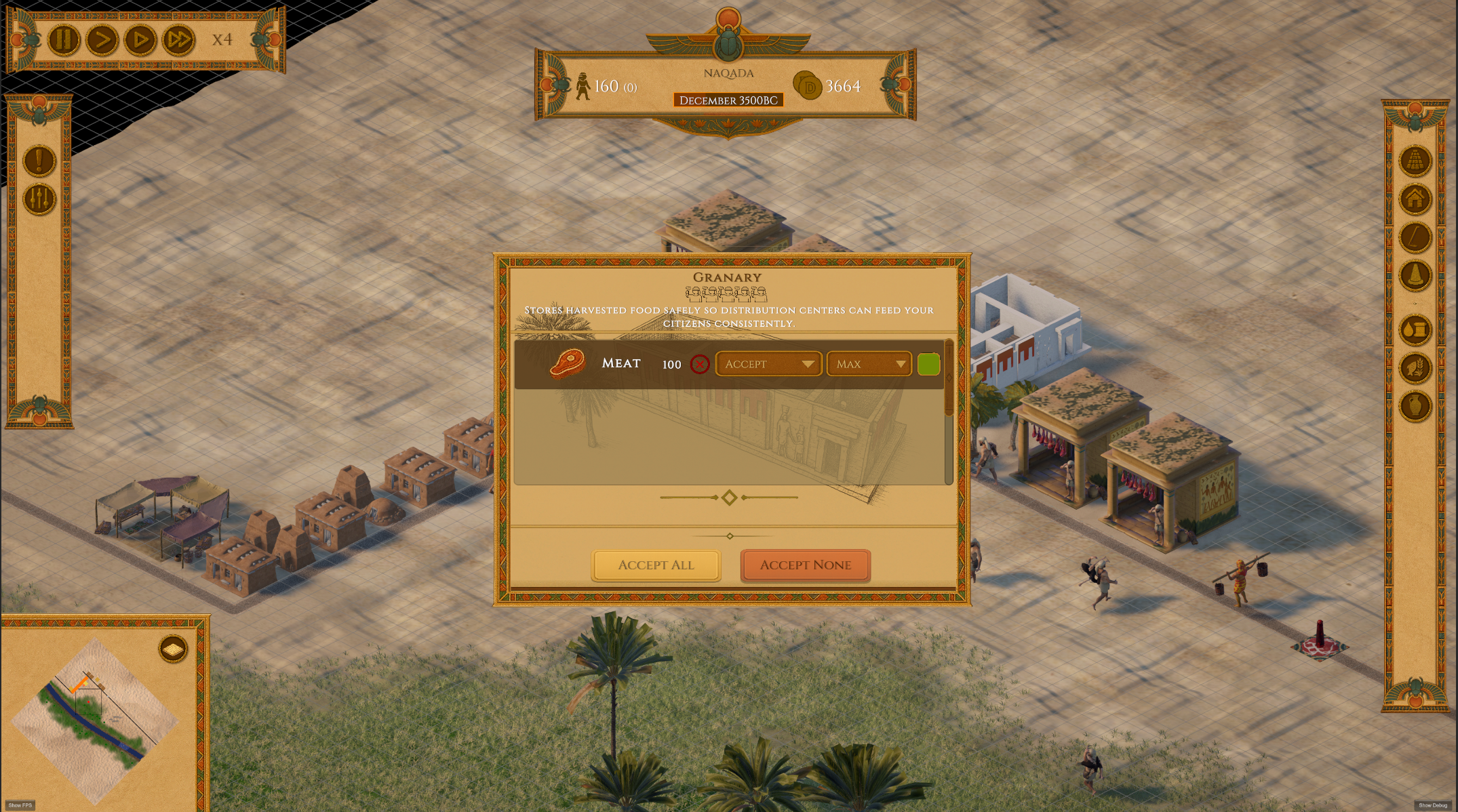
Granaries are the stability layer of the food system. They provide the safety net that keeps growth steady and prevents shortages from becoming crippling.
What I’ve focused on:
- Storage depth: Granaries store surplus food, smoothing out peaks and shortages over time.
- Planning impact: Their footprint encourages intentional layout choices rather than random placement.
- Multiple granaries work together: Adding more than one spreads storage across the map, improving access and resilience.
- No road limit: Granaries don’t require road access, giving you more freedom to place them where they make the most strategic sense.
This approach is inspired by the classic Impressions city-builder games, while adjusting the rules to allow more flexible layouts and long-term planning.
How Multiple Granaries and Market Stalls Work Together
As your town expands, the food system scales best when you spread it out:
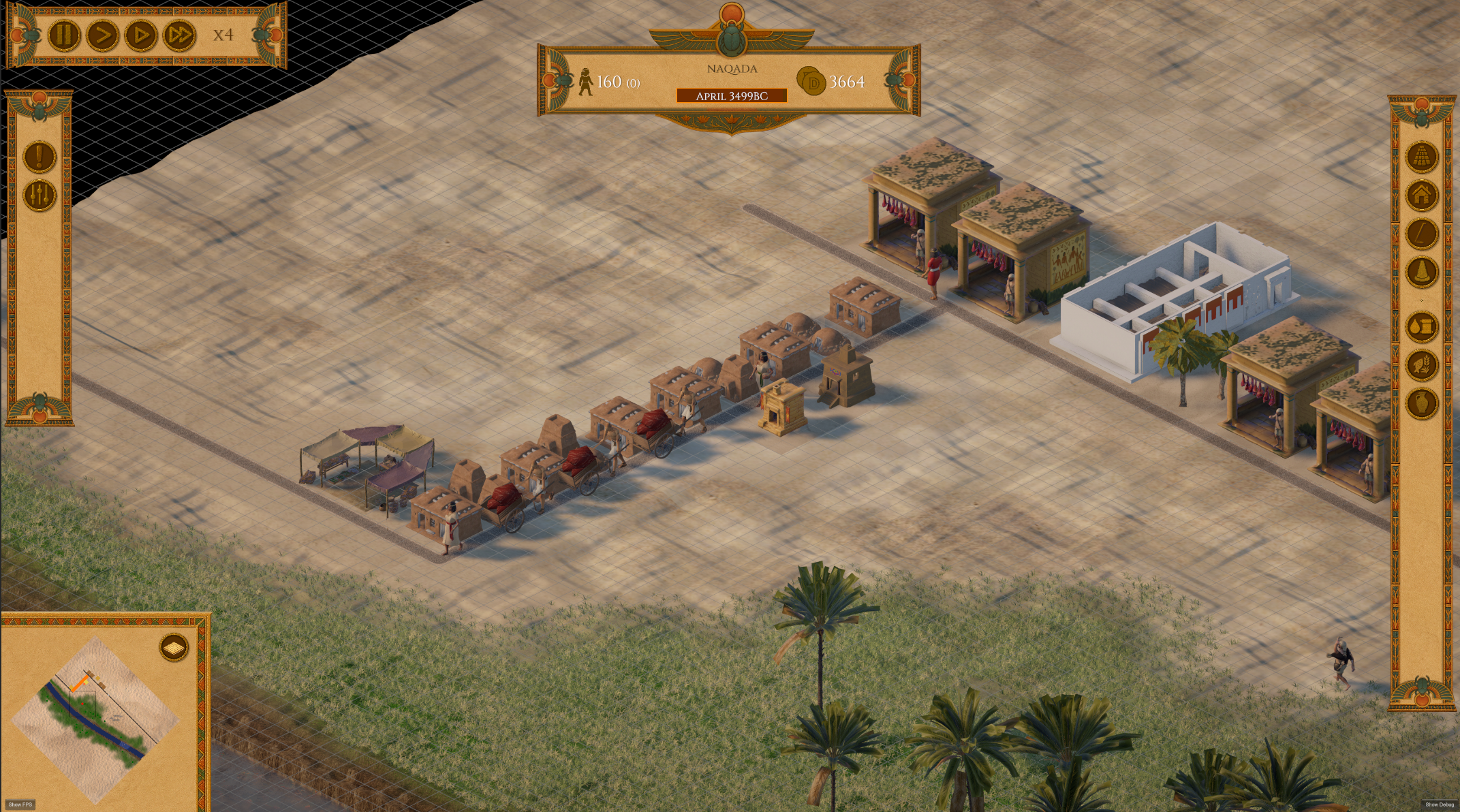
- Granaries act as distributed storage hubs. More granaries mean fewer bottlenecks and more reliable supply across the map.
- Market Stalls pull from that broader storage network. More stalls improve distribution reach and reduce reliance on any single point.
Together, this creates a web of supply, where food availability feels more consistent and layout decisions genuinely impact efficiency. The result is a system that feels organic: small villages can thrive with a simple setup, while larger cities grow into a layered network of storage and distribution.
What’s Next
Now that this loop is in place, I’ll be focusing on:
- Monitoring balance and pacing through real gameplay.
- Refining feedback and clarity so players better understand supply flow.
- Tweaking layout incentives to keep planning meaningful without being restrictive.
- Starting work on the military layer, which will build on these same ideas of logistics, placement, and long-term planning.
The journey continues.
Explore more updates